 Square
Building Near a Metro Corridor? A Site-First Guide to Metro NOCs in the MMR
If your proposal may interact with a metro corridor, identify the precise plot, alignment and responsible metro authority before choosing an application route. “Near a metro station” is not enough information to decide whether a clearance applies.
Replace a neighbourhood description with a plot.
A neighbourhood can contain multiple conditions: a road beside an elevated alignment, land near a depot or a building near underground infrastructure. Begin with a marked site boundary and identifiable property records. A travel map is useful for orientation, but is not an authoritative development-control overlay.
- Complete address and location pin.
- Survey/CTS identifiers and a boundary or survey plan, where available.
- The actual work proposed: new development, redevelopment, extension or another intervention.
- Available site layout, sections and below-ground information relevant to the proposal.
- Existing planning permissions and any previous metro remarks.
This is an enquiry pack, not an official application checklist. The appointed consultant and responsible authority must establish the additional information required.
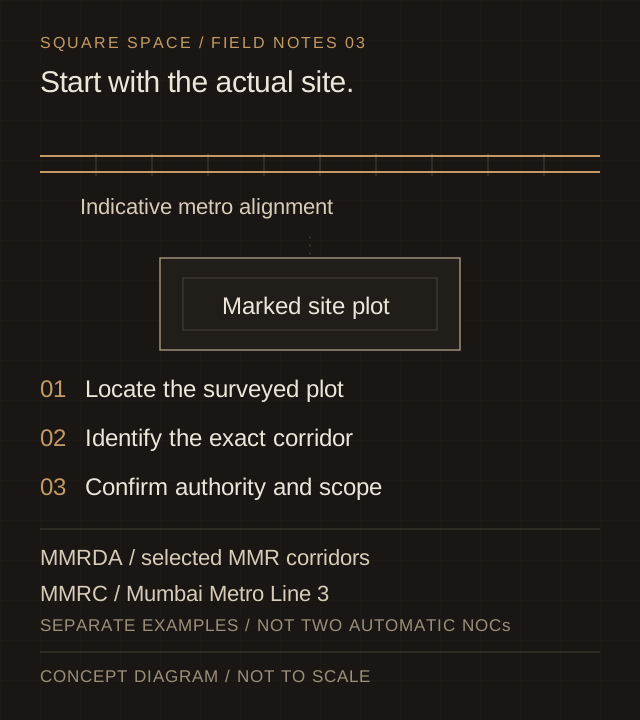
Ask three questions before commissioning a submission.
- 01 / Where?
What is the site relationship?
Identify the relevant alignment, influence-zone information or depot interface from appropriate authority material.
- 02 / What?
What work is actually proposed?
Describe the building and construction intervention accurately, including relevant underground or structural information.
- 03 / Who?
Which body decides?
Confirm the current application route and documentation requirements with the responsible authority.
Translate the interface into coordinated drawings.
The value of a consultant is not simply uploading a location pin. Site information, architectural proposals and engineering inputs need to describe the same project. Establish which existing drawing is sanctioned, which is proposed and which revision will be submitted. If an authority asks for a technical clarification, identify the professional responsible for that response.
Consider a hypothetical plot beside an elevated metro corridor: its entrance arrangement may need architectural review while proposed excavation needs a separate technical discussion. The consultant should define these interfaces rather than assume an architectural plan alone resolves them. This example describes a possible coordination problem, not a claimed approval requirement for every such plot.
Engineering coordination and statutory-documentation assistance can be discussed within Square Space’s appointment. Required specialist studies, registrations or certification must be confirmed separately. Only the authority determines applicability and decides a clearance.
Unsure whether an NOC applies? Start there.
You do not need to arrive with a complete application or a guessed approval category. Bring what you know and identify what you do not. Ask for an initial scope that establishes the authority interface and the information needed for the next stage; do not mistake an enquiry for clearance to commence work.
The owner’s building-permission preparation guide helps organise the broader brief. Readers along the Line 5 planning context can explore Thane architectural services and the Bhiwandi studio’s services. The published project portfolio demonstrates architectural work, but does not establish that any pictured project received a metro NOC.
A few useful distinctions.
Does a site near a metro station automatically need the same NOC as every other site?
No such universal rule is assumed here. The exact site, proposed work, corridor, influence-zone information and responsible authority determine the review to investigate.
Should I finalise the design before checking the metro interface?
Investigate relevant infrastructure constraints early enough to inform design decisions. The appropriate consultant appointment and authority requirements depend on the actual proposal.
Sources & scope.
- MMRDA — construction NOCs in metro alignments and influence zones
- MMRDA — Metro Line 5 (Thane–Bhiwandi–Kalyan)
- Mumbai Metro Rail Corporation — development NOC application for Line 3 (PDF)
Official guidance consulted for this field note. Portal routes, requirements and policies can change; confirm the current position for the site and application. This is general preparation guidance, not a statutory checklist, legal determination or permission to construct or occupy. Any appointment and required specialist work must be confirmed separately. Approval decisions remain with the competent authority.
Discuss your site and metro clearance.
Share the site pin, plot identifiers, proposed work and any existing metro correspondence. We can discuss which authority interface and documentation scope need investigation.
Discuss your site and metro clearance